 Live · 3 tiers from R99/mo
Every solar system on one screen
Multi-brand fleets mean multi-portal mornings, and customers notice broken systems before you do. VoltIQ ends both of those problems on day one: a WhatsApp report for the homeowner, a dashboard for the installer, fleet analytics for the operator.
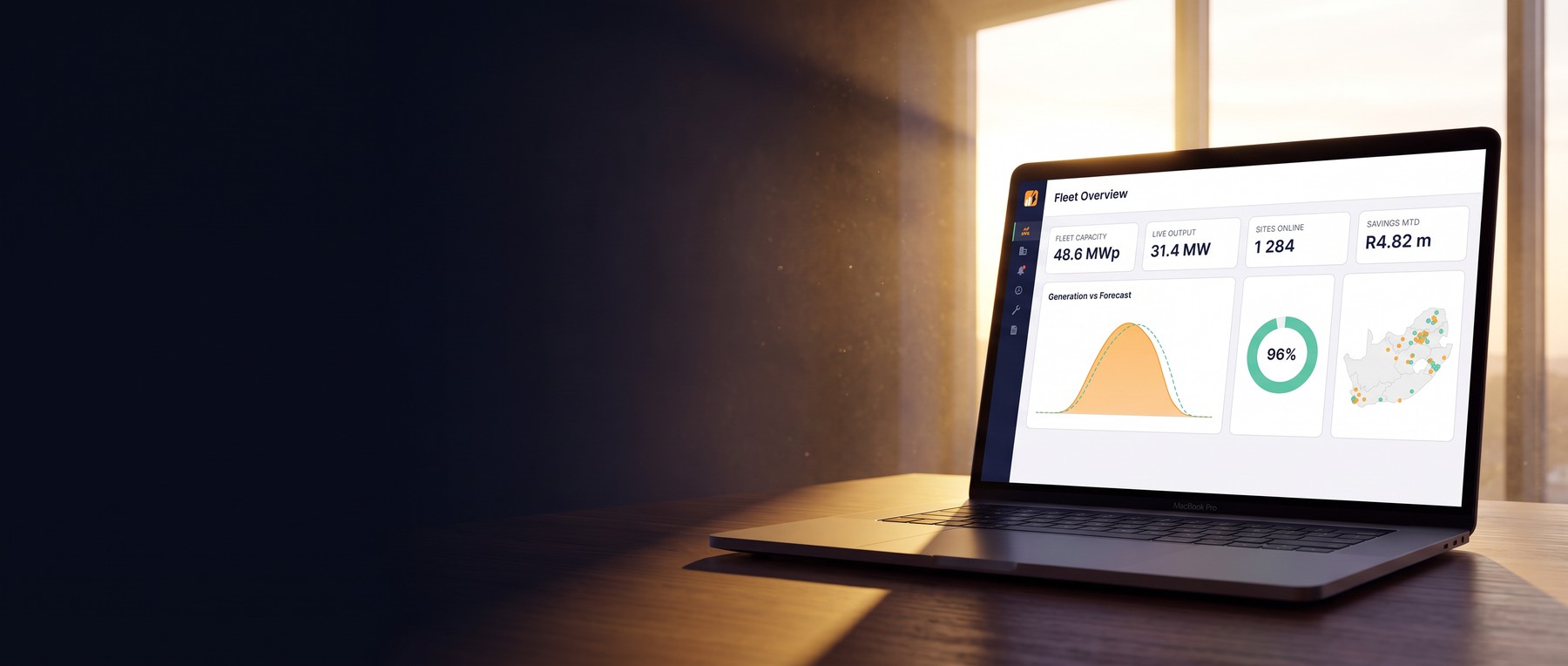
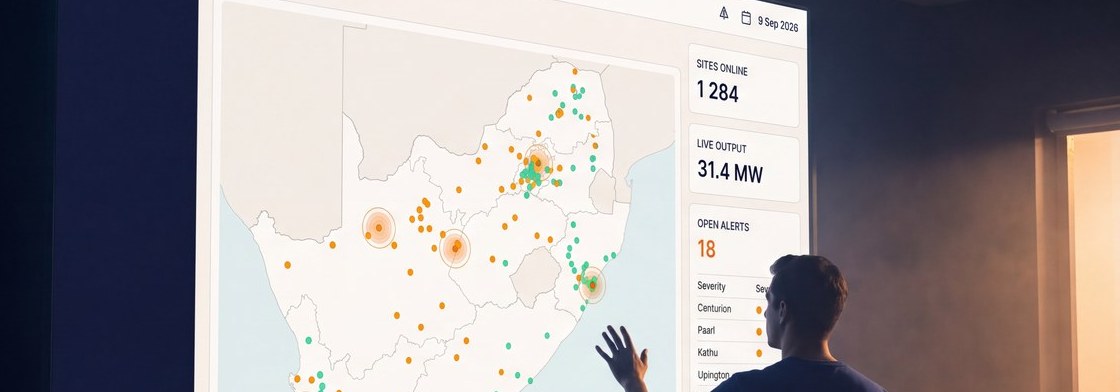
Illustrative dashboard. Figures shown are sample data, not a customer fleet.
Four portals. One morning. Somewhere in your fleet a system went down last night, and the customer is going to find it first.
VoltIQ polls every supported cloud every 15 minutes through daylight hours and hourly after sunset, normalises what comes back into one set of units, and watches it while you sleep.
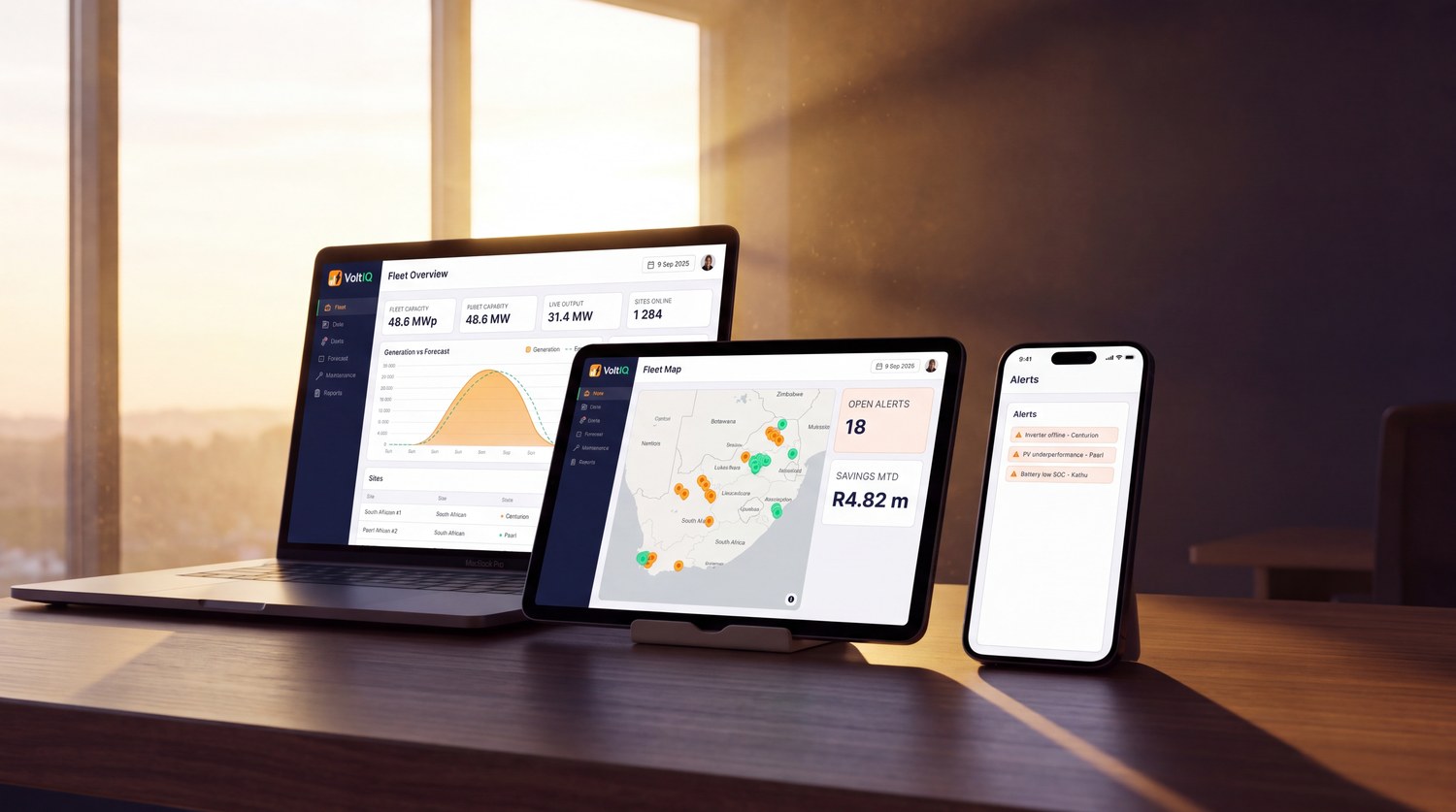
Illustrative dashboard. Figures and site names shown are sample data.
01 · One dashboard
Every install, side by side
Deye, Sunsynk, Luxpower, and FoxESS stop being four separate logins with four different ways of expressing the same number. VoltIQ converts every brand into the same units and the same sign convention, then puts the whole fleet on one screen you can read in a minute.
- Every supported install in a single view
- Brands mixed together, not siloed per portal
- One sign convention, so exports never read backwards
- Built for fleets, not for one homeowner’s system
The dashboard starts at VoltIQ Installer, which covers every system you have fitted for one price.
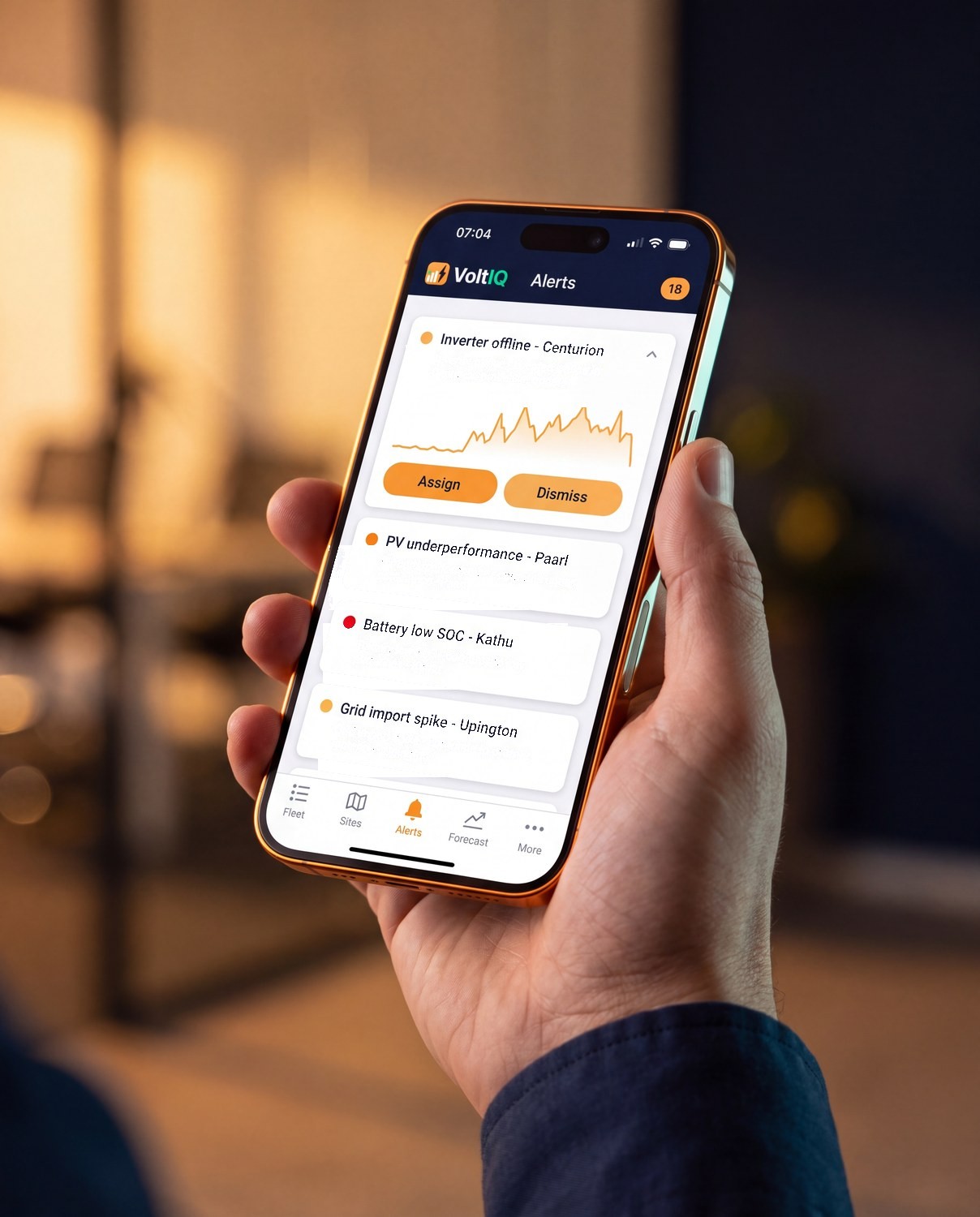
Illustrative dashboard. Alert names shown are sample data.
02 · The signal
The fault finds you
Issue detection runs on the telemetry automatically, so a system that quietly stopped producing becomes a task on your list instead of an angry phone call on a Saturday. Confirm, edit, or dismiss each alert, and the detection logic tunes itself to your fleet: the noise drops away, the real faults stand out.
- Alerts generated from telemetry, no manual checking
- Silent faults surface as a task, not a complaint
- Every confirm or dismiss teaches the detection logic
- Best-effort by design: we tell you where it can miss
Issue alerts are included with Installer. Early fault warnings, which flag drift before a system stops, are a Fleet add-on.
03 · 06:40
The brief lands before you turn the key
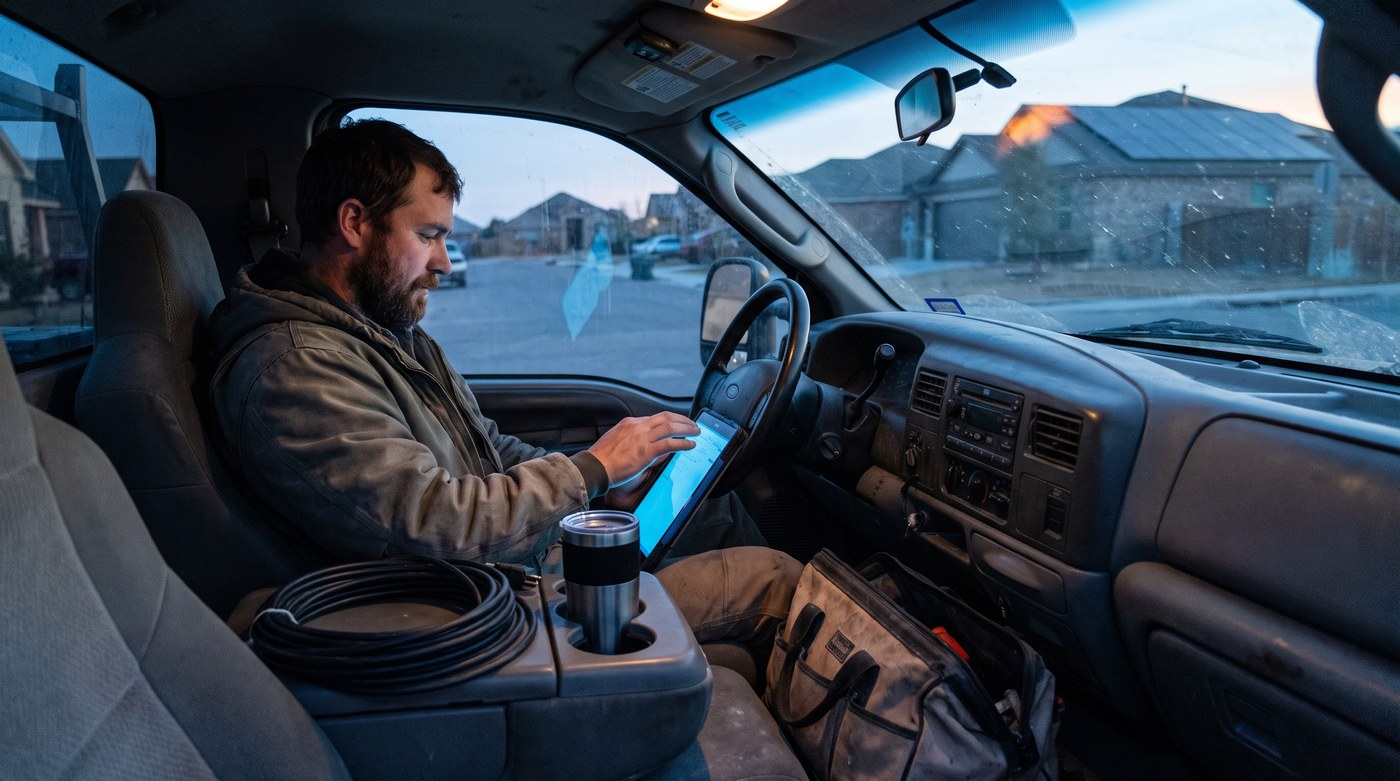
A co-branded WhatsApp message with the overnight picture: what broke, what is underperforming, what is worth a call. It carries your branding, not ours, and it only arrives when there is something to say. No daily "all good" message to start ignoring by week three.
- Sent only when there is something to report
- Your installer branding, Do.Qix-powered footer
- Read it in the cab, act on it before the first job
- Recipient opt-in stays your call as the installer
A WhatsApp message is included on Home and Installer, and Fleet includes a weekly report per site. Scheduled reporting beyond that is an add-on.

04 · The upside
Monitoring that pays for itself
The same telemetry that catches faults also flags the systems worth a conversation. Each opportunity surfaces once, not every morning until you learn to ignore it, and it arrives as a prompt to phone the client rather than an automatic quote. You walk into the garage with that system’s own numbers instead of a guess.
- Opportunities flagged from the same telemetry
- Each one surfaces once, not every single morning
- A prompt to phone the client, not an automatic quote
- You decide which flags are worth acting on
Upsell flagging is a VoltIQ Fleet add-on.
Three people read the same data
A solar install has more than one owner. VoltIQ shows each of them the part they can actually act on, from the same telemetry.

Wants to know it is working
They paid for the system and they mostly think about it when the lights go out. A short report from their own installer, in their installer’s branding, answers the only question they have: is this thing doing what I paid for?
Wants the fault before the phone call
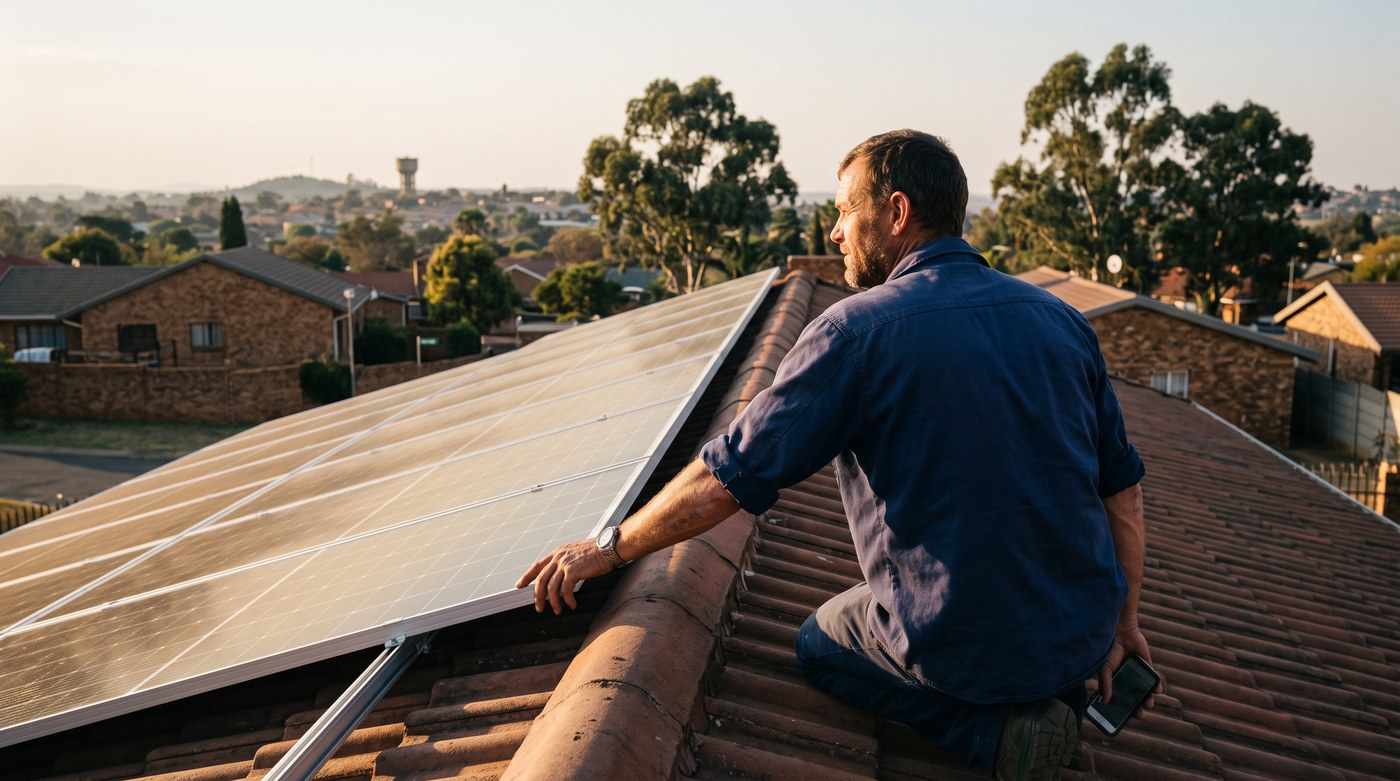
You are on a roof, not at a desk. You need to know which of your installs needs attention today, which client is worth a call, and none of the rest. That is the whole job of the morning brief.
Wants the pattern, not the incident
Once you are past a few dozen sites, a single system matters less than the shape of the whole book: which brands give trouble, which installs drift, where next month’s callouts are building up. Fleet is priced per large site, with the deeper warnings and flags available as add-ons.
Dashboard shown is illustrative. Site counts, output and alert figures are sample data.
Live with four brands
Supported means VoltIQ ingests telemetry from that manufacturer’s portal or API and applies the full feature set available on your tier.
Running something else? We add brands over time and we will not promise one before it works. Until a brand is listed we make no guarantee of compatibility with any specific brand, model, firmware version, or third-party portal, and subscribing for it is at your own risk. Tell us what you run; if enough installers are on the same brand it moves up the queue.
Tell Us Your BrandThree tiers, one for each person in the story
ZAR, billed monthly in advance. Month-to-month, no long-term contract. Each tier has a base that covers a defined scope, and a short list of add-ons priced on top.
- Covers one home’s solar system
- A WhatsApp alert when something needs attention
- In your installer’s branding, not ours
- No app to install, no dashboard to learn
- Regular scheduled reporting
- Additional homes
- Every system you have fitted, however many that is
- Unified dashboard for Deye, Sunsynk, Luxpower, and FoxESS
- The WhatsApp message on your phone
- Issue alerts you can confirm, assign, or dismiss
- Encrypted storage of the portal credentials you supply
- Scheduled reporting beyond the standard message
- A dashboard and a weekly report for the site
- Fleet analytics across the sites on your account
- Multi-user access, whatever the size of your team
- Priced per large site, so you only pay for the sites you run
- Additional reports
- Early fault warnings
- Upsell opportunity flags
- White-label branding
* What is the difference between VoltIQ Home, Installer and Fleet pricing?
Each tier works differently, so here is exactly what moves each one.
- Home covers one home at R99. A second home is charged again, and regular scheduled reporting is an add-on. Alerts themselves are included.
- Installer covers every system you have fitted for one price. Adding installations does not move it. Scheduled reporting on top of the standard WhatsApp message is the add-on.
- Fleet is priced per large site, so five sites is five times R999. Additional reports, early fault warnings, upsell flagging and white-label branding are each priced on top.
Your team size never moves any of them. Multi-user access on Fleet is included whatever the headcount.
Tell us how many homes or sites you carry and which add-ons you want, and we will give you the actual monthly figure before you commit to anything.
Any change to a published price needs 30 days’ written notice and only applies from the next billing cycle. Cancel any time: telemetry pulls and WhatsApp reports stop at the end of the cycle, and dashboard tiers stay read-only for a 30-day export window before the data is deleted. VoltIQ sits alongside the manufacturer portals, so cancelling never touches the installations themselves. ZAR pricing on SA-hosted infrastructure, portal credentials encrypted at rest, and data handled under our Privacy Policy and POPIA.
Home from R99 a month, Installer from R299 a month, Fleet from R999 per large site per month, billed monthly in advance in ZAR. Full VoltIQ terms apply.
What VoltIQ does not do
Monitoring software that oversells itself gets installers into trouble. Here is where the line sits, in the same words as our terms.
It doesn't replace a site visit
Alerts, upsell flags, and morning reports are advisory. They do not replace site visits, electrical inspections, certified compliance checks, or licensed installer judgment. The install, repair, and commercial decisions stay yours.
Detection is best-effort
False positives and missed events can occur, particularly during firmware updates, extreme weather, or upstream API issues. We keep improving the detection logic, and we do not warrant that it is complete or accurate.
We depend on upstream portals
VoltIQ reads from each manufacturer's portal. Outages, rate limits, or breaking API changes on their side are excluded from our uptime target. We restore service as fast as the upstream allows.
The full picture, including WhatsApp opt-in obligations and intellectual property, is in the VoltIQ terms.
Stop hearing about faults from the customer
Installers: tell us which brands you run and how many systems you carry, and we will put your own fleet on one screen. Homeowners: ask your installer about VoltIQ Home, or talk to us and we will point you at one.
Home from R99 per month per home, Installer from R299 per month, Fleet R999 per month per large site. Month-to-month, no long-term contract. Live with Deye, Sunsynk, Luxpower, and FoxESS. Terms apply.